When shopping for a spa in Ontario, most buyers focus on jet count, seating layouts, and winter insulation. However, your home's electrical panel ultimately dictates how fast your water heats, whether the heater runs while the jets are on high, and how much installation will cost.
Navigating the Ontario Electrical Safety Code (OESC), understanding GFCI panel sizing, and choosing between 110V (Plug-and-Play) and 220V (Hardwired) systems can feel overwhelming. This comprehensive 2026 guide breaks down everything you need to know before installing your hot tub or swim spa in Ontario.
Navigating the Ontario Electrical Safety Code (OESC), understanding GFCI panel sizing, and choosing between 110V (Plug-and-Play) and 220V (Hardwired) systems can feel overwhelming. This comprehensive 2026 guide breaks down everything you need to know before installing your hot tub or swim spa in Ontario.
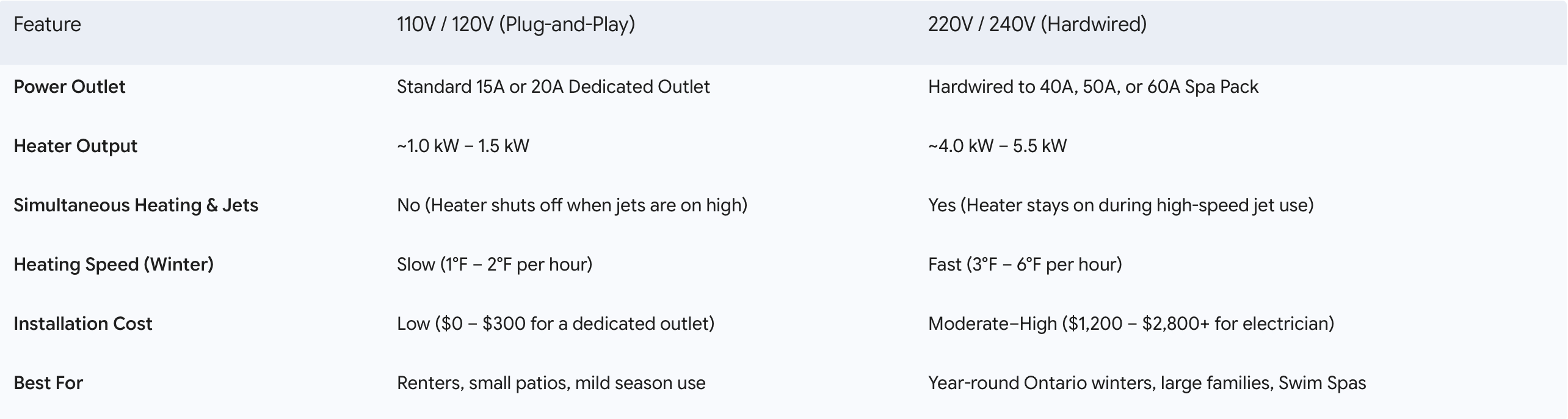
Quick Comparison: 110V Plug-and-Play vs. 220V Hardwired
110V Plug-and-Play Hot Tubs: Pros, Cons, and Limitations
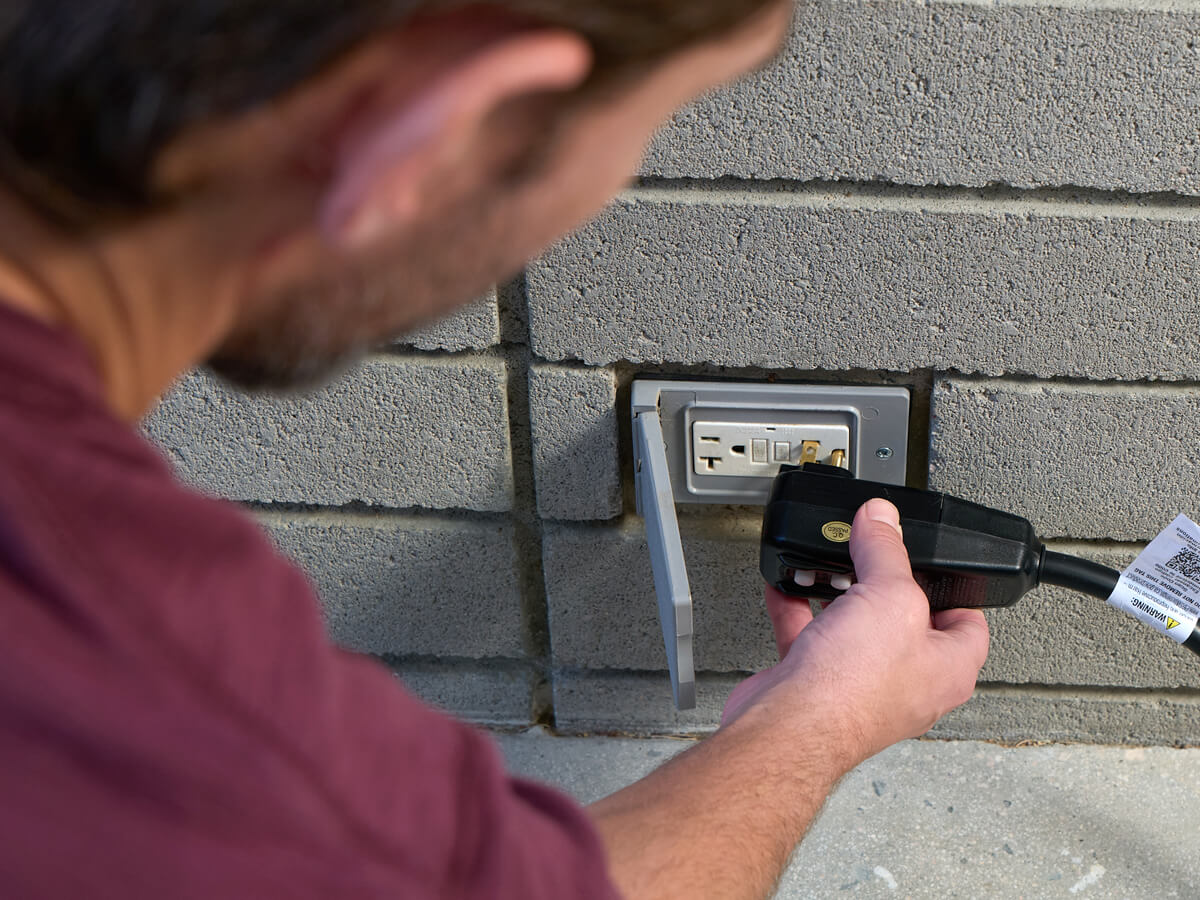
A 110V (120V) hot tub connects directly into a standard 15-amp or 20-amp household outlet equipped with a built-in GFCI cord end.
Advantages
- Zero or Low Upfront Electrical Cost: If you already have a dedicated outdoor outlet within reach (per ESA guidelines), you can plug in and start filling immediately.
- Portability: Ideal for renters or homeowners who plan to move in the near future.
- Lower Initial Purchase Price: 110V entry-level spas are generally less expensive to manufacture.
Critical Drawbacks for Ontario Winters
- The "Heater or Jets" Compromise: On a 110V circuit, the electrical system cannot support running the 1.5 kW heater and the high-speed pump simultaneously. When you turn the massage jets on high, the heater automatically shuts off.
- Slow Recovery Time in Sub-Zero Weather: In an Ontario January (-15°C), opening the cover drops the water temperature quickly. Because the heater shuts off while you soak with high jets, the water temperature will steadily drop during your session.
220V Hardwired Hot Tubs: The Standard for Canadian Winters
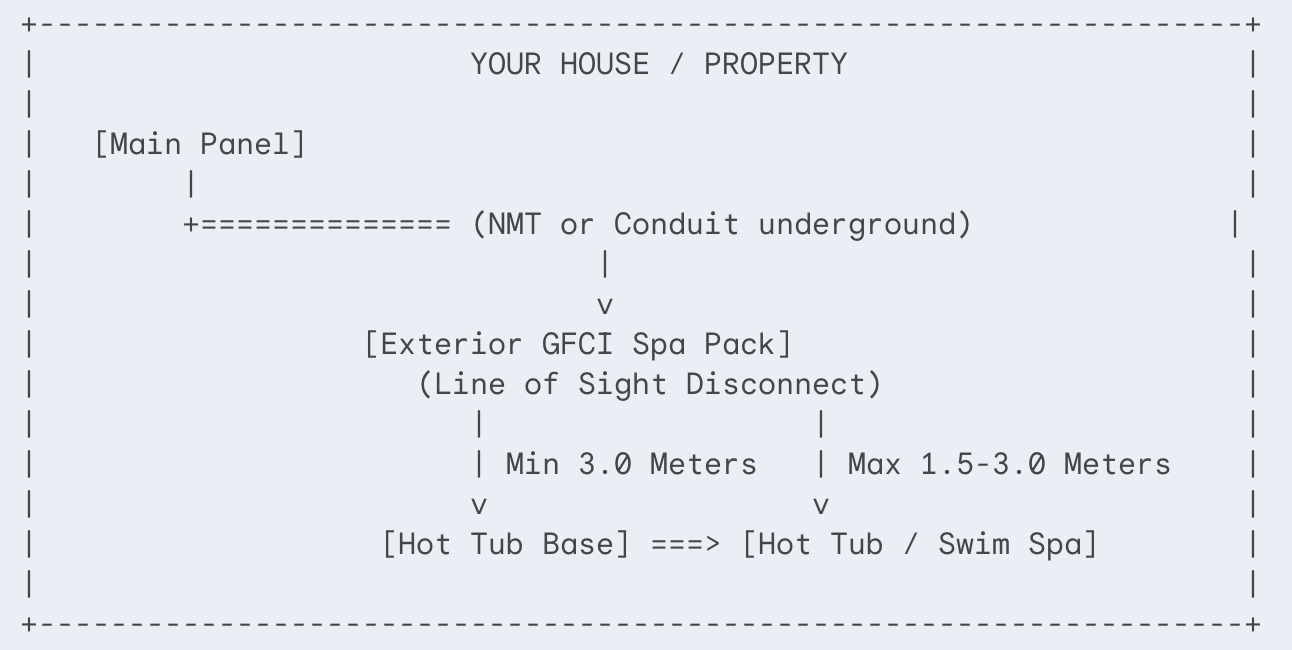
A 220V (240V) system requires a hardwired connection from your main circuit breaker panel through an exterior disconnect panel (spa pack) directly to the spa controller.
Advantages
- Uncompromised Winter Performance: A 4.0 kW or 5.5 kW heater stays active even when all jet pumps are blasting on high speed. Your water stays at a cozy 40°C (104°F) regardless of ambient winter temperatures.
- Rapid Heat-Up Times: Heats water 3x to 4x faster than a 110V model during initial fill or temperature adjustments.
- Essential for Swim Spas: Swim spas feature high-draw swim current propulsion systems and multiple pumps that strictly require a 220V 50A or 60A connection.
Drawbacks
- Higher Upfront Installation Cost: Requires a licensed Electrical Contractor to pull permits and run dedicated wiring.
Ontario Electrical Safety Code (OESC) Requirements
When installing a hot tub or swim spa anywhere in Ontario, your installation must comply with Section 68 of the Ontario Electrical Safety Code. Non-compliant installations can void home insurance policies and create severe shock hazards.
Key ESA Rules to Know:
- Dedicated GFCI Protection: Every hot tub must be protected by a Class A Ground Fault Circuit Interrupter (GFCI).
- Line-of-Sight Disconnect Switch (Spa Pack): The emergency shutoff panel must be located at least 1.5 meters (5 feet) away from the hot tub water edge, but no further than 3.0 meters (10 feet), in direct line-of-sight. This prevents occupants from touching the switch while in the water while ensuring fast emergency access.
- Dedicated Circuit Only: No other appliances, lights, or outdoor outlets can share the hot tub circuit breaker.
- Permits & Inspections: In Ontario, any major electrical work requires an ESA Notification of Work (Permit). Always demand an ESA Certificate of Acceptance from your electrician upon completion.
GFCI Breaker & Wire Gauge Sizing Chart
Using the correct copper wire size (AWG) is critical to prevent dangerous voltage drops and overheating.
Important: Aluminum wiring is not permitted for hot tub final connections in Canada; always use continuous copper conductors.

Estimated Electrical Installation Costs in Ontario (2026 Breakdown)
While prices vary based on distance from your panel and electrical capacity, here is what you can expect to pay for a certified installation in the Greater Toronto Area (GTA) and Ontario:
Total Estimated Cost: $1,200 - $3,200 CAD
├── Licensed Electrician Labor: $500 - $1,100
├── Materials (Teck90 wire, Spa Pack, Conduit): $400 - $1,200
├── ESA Permit & Inspection Fees: $150 - $250
└── Panel Upgrade (If 100A is full): $1,500 - $3,000 (Optional)
├── Licensed Electrician Labor: $500 - $1,100
├── Materials (Teck90 wire, Spa Pack, Conduit): $400 - $1,200
├── ESA Permit & Inspection Fees: $150 - $250
└── Panel Upgrade (If 100A is full): $1,500 - $3,000 (Optional)
What Factors Drive Up the Cost?
- Distance from Main Panel: Long wire runs from the basement across finished rooms or underground trenches significantly increase material and labor costs.
- Sub-Panel or Service Upgrades: If your home currently has a 100-Amp service with no remaining breaker slots, you may need a sub-panel ($400–$800) or a full home service upgrade to 200 Amps ($2,000–$4,000).
Step-by-Step Electrical Installation Checklist
Before your new SkyBlue Hot Tub or Swim Spa arrives on site, follow this step-by-step checklist to ensure a seamless delivery and hookup:
- Check Home Electrical Panel Capacity: Confirm whether your main panel has 2 open slots (for a 240V double-pole breaker) and sufficient amperage headroom.
- Hire an ESA-Certified Licensed Electrical Contractor (LEC): Verify their credentials at esasafe.com. Do not rely on uncertified handymen for 240V high-amp connections.
- Determine the Cable Route: Decide whether wiring will run through the basement, along the exterior foundation, or underground. Underground conduit must be buried at least 460 mm (18 inches) deep per code.
- Mount the Exterior GFCI Disconnect: Ensure it is positioned between 1.5 m and 3.0 m from the planned hot tub footprint.
- Pull the ESA Permit: Confirm your electrician has pulled the required inspection permit prior to starting work.
- Schedule Connection for Delivery Day: Coordinate with your hot tub dealer so your electrician is ready to complete hardwiring as soon as the spa is positioned on the pad.
FAQ: Hot Tub Electrical Requirements in Canada
Can I plug a 110V hot tub into a regular extension cord?
No. Never use an extension cord with a hot tub. Standard extension cords cause voltage drops, which overheat the pump motor, trip the breaker, and present a severe fire hazard. 110V spas must be plugged directly into a dedicated wall outlet.
Will a 110V hot tub work during a Canadian winter?
Yes, but with caveats. Highly insulated models (like SkyBlue's Perimeter Barrier insulation) retain heat effectively while covered. However, during active use in freezing temperatures, the water temperature will gradually drop because the heater cannot run alongside the high-speed jets.
Can a 110V hot tub be converted to 220V later?
Many convertible models feature dual-voltage pack controllers (e.g., Balboa or Gecko packs). A licensed electrician can reconfigure the internal jumpers and wire the spa to a 220V supply, upgrading your heating power from 1.5 kW to 4.0 kW or higher.
Conclusion: Which Setup Is Right for You?
If you want a budget-friendly option for summer and fall use—or live in a rental property—a 110V Plug-and-Play hot tub offers low upfront costs and simple setup.
However, for full year-round luxury in Ontario's harsh winter climate, a 220V hardwired hot tub or swim spa is the superior long-term investment. It provides instant heating, consistent temperature maintenance, powerful jet action, and superior energy efficiency during cold spells.
Preparing your backyard for a new hot tub? Contact the experts at SkyBlue Hot Tubs today or visit our GTA showroom to explore our high-efficiency 220V spa models engineered specifically for Canadian winters.