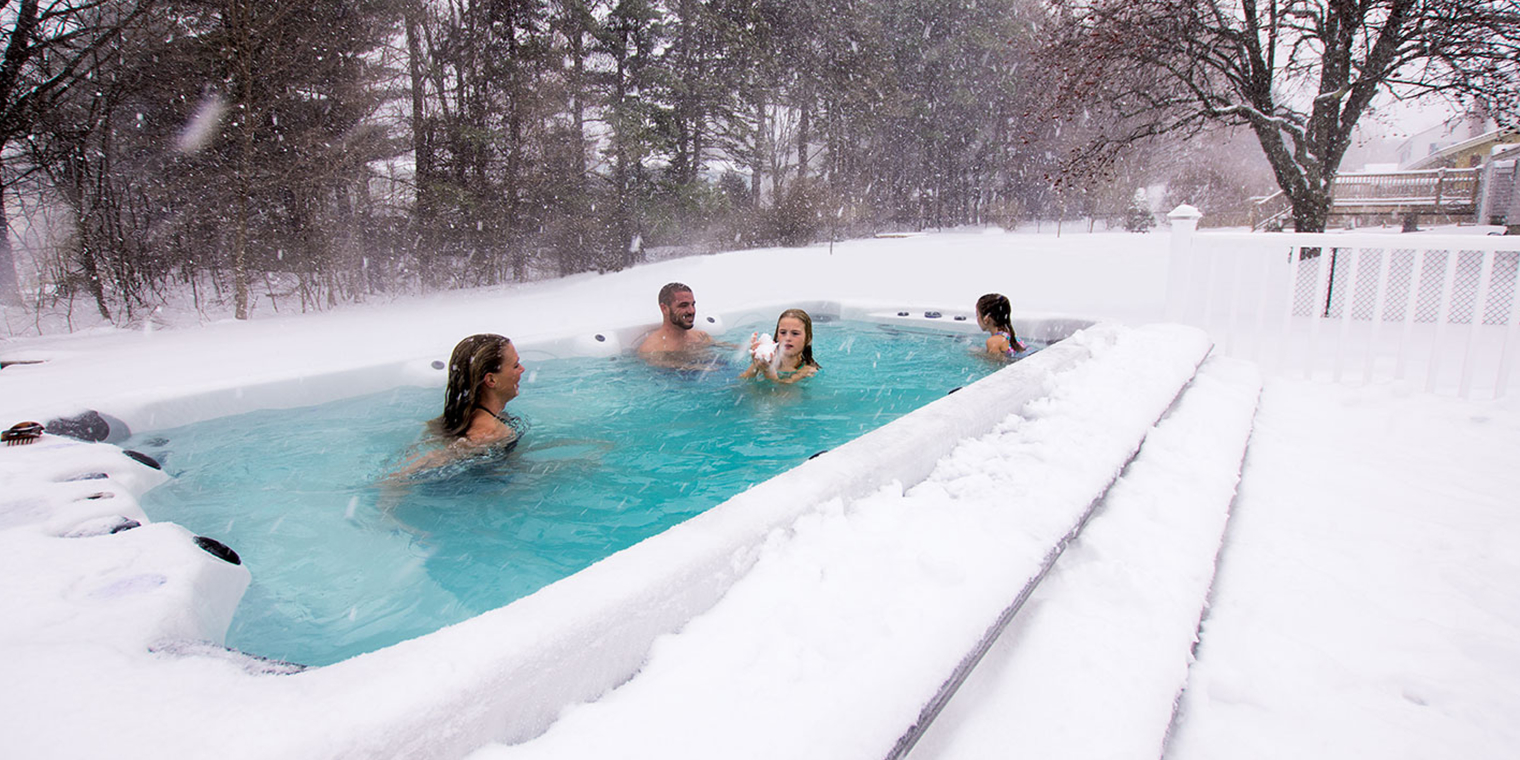
For Canadian homeowners, investing in an all-season swim spa offers the ultimate blend of year-round aquatic fitness and backyard luxury. However, when sub-zero temperatures sweep across Ontario, Alberta, and Quebec, one crucial question dominates every prospective buyer's mind: How much will operating a swim spa during a harsh Canadian winter actually add to my monthly electricity bill?
While traditional full-sized inground pools must be drained and closed by October to prevent freezing damage, modern swim spas—such as the Niagara 15' Swim Spa—are specifically engineered to operate 365 days a year.
Below is an honest, data-backed breakdown of expected winter running costs, key factors affecting energy consumption, and how engineered insulation keeps your power bill surprisingly manageable.
Average Monthly Winter Running Costs in Canada
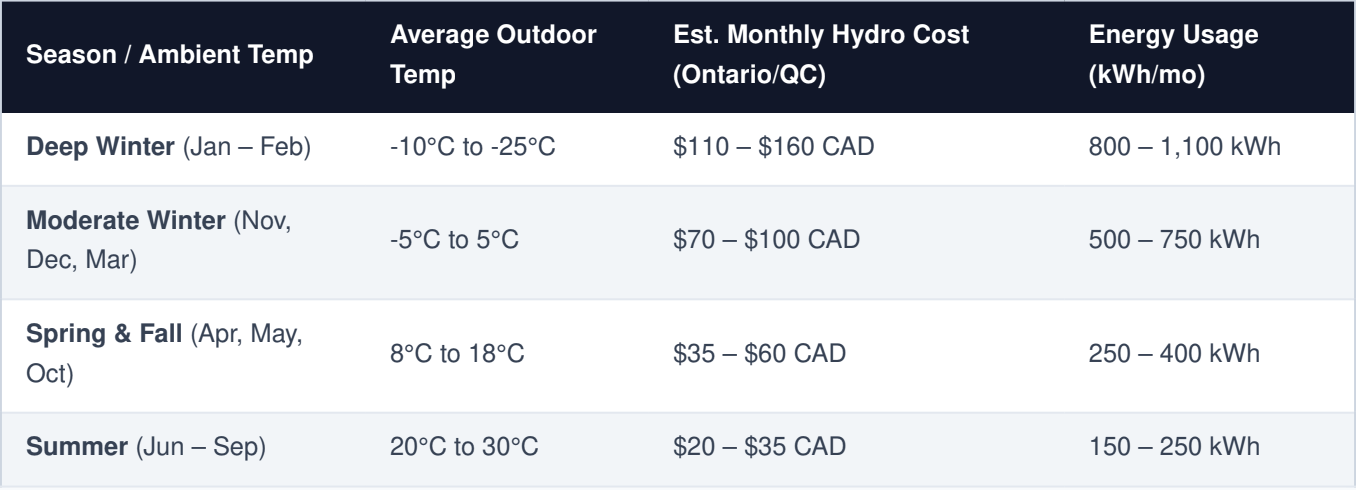
On average, operating a 15-foot swim spa during peak winter months (December through March) in provinces like Ontario or Quebec costs between $110 and $160 CAD per month in electricity. During milder spring and autumn months, this figure drops to $35 – $60 CAD per month.
These figures depend heavily on local hydro rates, outdoor ambient temperatures, temperature set points, and structural insulation efficiency.
Monthly Energy Cost Breakdown by Season
Key Factors Influencing Your Winter Electricity Bill
1. Thermal Insulation Architecture
Water heat retention is almost entirely governed by cabinet and shell insulation. Uninsulated or poorly insulated swim spas allow ambient cold air to constantly leach heat from the water, forcing the heater to run near continuously. Our high-performance models designed for Canadian winters utilize insulation combined with heavy-duty cabinet lining to trap waste heat generated by jet pumps back into the water chamber.
2. Insulated Cover Integrity & Tapering
Up to 75% of total thermal heat loss occurs through the surface of the water via evaporation. A high-density, tapered hardcover (typically 5" to 3" thickness) with a full-length heat-seal hinge is essential. A tight seal prevents steam escape during nights reaching -20°C.
3. Time-of-Use (TOU) Hydro Rates
In provinces like Ontario, taking advantage of Tiered or Time-of-Use electricity pricing significantly lowers costs. Programming filtration cycles and main heating recovery periods during off-peak hours (overnight and weekends) keeps energy expenses at the lower threshold of estimated ranges.
Why the Niagara 15' Swim Spa excels in Canadian winters:
Thanks to its compact 15-foot footprint, the Niagara 15' Swim Spa holds an optimal water volume (6,500 Liters). It provides ample room for resistance swimming and 3-person hydrotherapy while requiring significantly less energy to maintain a warm 100°F (38°C) soaking temperature than larger 18-to-19-foot dual-zone models.
4 Pro Tips to Reduce Winter Swim Spa Running Costs
- Invest in a Thermal Floating Blanket: Placing a bubble thermal blanket directly on the water surface under your main hardcover adds an extra insulation layer, cutting surface heat loss by up to 15%.
- Lower Water Temp When Swimming: Keep the water around 86°F–90°F (30°C–32°C) if using the spa primarily for active fitness swimming, and boost it to 100°F (38°C) for hydrotherapy relaxation sessions.
- Keep the Hardcover Snug & Clear of Heavy Snow: Promptly sweep heavy, wet snow accumulation off your cover to maintain its structural integrity and insulation efficiency.
- Never Power Off in Winter: Always leave the swim spa powered on. Freeze-protection programming automatically circulates warm water through pumps and plumbing when ambient temperatures drop, protecting critical components from costly freeze damage.
Ready for All-Season Swimming at Home?
Explore the Niagara 15' Swim Spa — engineered specifically for the harsh Canadian climate with Canada-wide shipping and expert advice.